
Biodiversity
Sustainable Development at Golf Club Villars
Since Pierre Del Bono became Head Greenkeeper in 2009, Golf Club Villars has profoundly transformed its course-maintenance practices, firmly embracing sustainable development.
The use of plant-protection products was completely discontinued in 2011. Today, the course is maintained with the utmost respect for the environment, with drastically reduced irrigation and practices that work in harmony with nature. This approach improves turf quality while encouraging biodiversity.
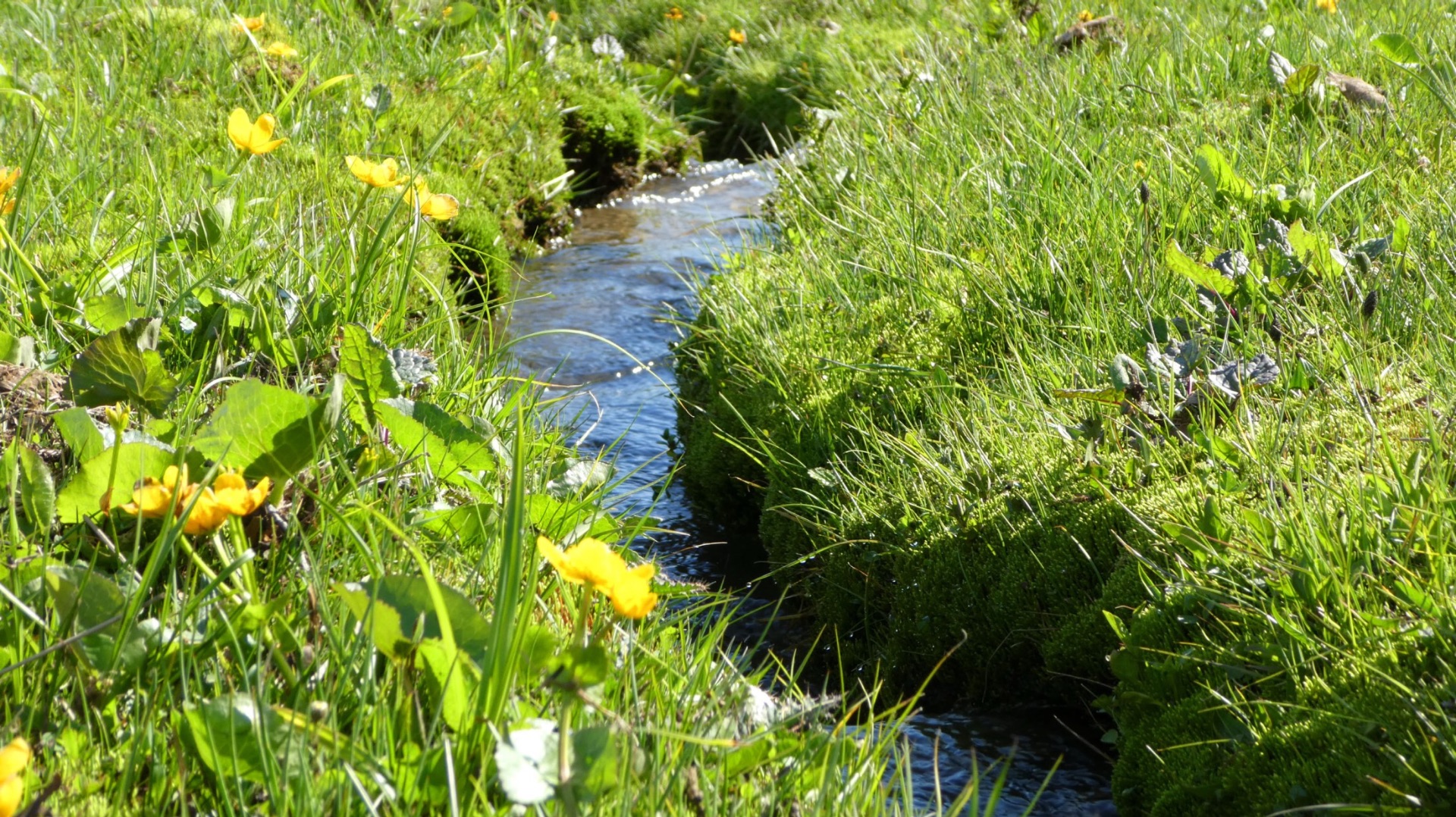
The course also benefits from a natural water supply provided by hillside wetlands, allowing irrigation to be limited to just 2% of its total surface, using rainwater only. Course maintenance relies on mechanical methods and manual weeding, without the use of chemicals. The resulting plant diversity strengthens the turf’s natural resistance to disease, encourages deep root growth and preserves rich biodiversity.
Several initiatives demonstrate this commitment:
- Beehives have been installed near the former white tee on hole No. 10. Some of the organic honey produced on site is available for purchase in the Pro Shop.
- Selected areas of rough are grazed by cows in partnership with local farmers. This supports local milk and cheese production while naturally thickening the grass without machinery or fuel.
- Organic fertilisers suitable for organic farming are used instead of conventional fertilisers.
- Hardy grass varieties, adapted to drought and low fertilisation, have been selected to reduce maintenance requirements and improve turf resilience.
- A five-star insect hotel, with breathtaking views of Mont Blanc 😉, has been installed near a biotope between the 11th green and the 12th tee, providing shelter and protection for small wildlife.
- No fungicidal treatments are used anywhere on the course.
Through these practical measures, Golf Club Villars has become an example of environmentally responsible course management, demonstrating that sporting excellence and respect for nature can go hand in hand.
The golf course benefits from natural hydration provided by hillside wetlands, limiting irrigation to just 2% of the grounds using rainwater. No plant protection products have been used since 2011; maintenance relies on mechanical methods and manual weeding. Plant diversity and sustainable practices improve disease resistance, encourage deep rooting and help preserve rich biodiversity.
Only 2% of the grounds are irrigated, according to need and exclusively with rainwater.

GEO Certification
1. Background
- GEO certification, developed by the Golf Environment Organization, is an internationally recognised sustainability standard. It helps golf facilities minimise their environmental impact while maximising their social and economic contribution.
- Swiss Golf encourages clubs to obtain this certification to promote environmental responsibility and raise awareness of sustainable practices among golfers, partners and the public.
2. Objectives
- Environmental improvement: Reduce the ecological footprint of golf facilities through sustainable resource management.
- Social contribution: Strengthen relationships with local communities by creating employment, raising awareness and encouraging participation.
- Economic efficiency: Achieve long-term savings through sustainable practices such as responsible water management and reduced CO₂ emissions.
3. Areas Covered by the Certification
- Biodiversity: Protecting and restoring natural habitats.
- Resource management: Reducing the consumption of water, energy and chemicals.
- Community engagement: Raising awareness among members and involving local communities.
- Waste management: Reducing waste and encouraging recycling.
- Climate action: Reducing greenhouse-gas emissions and promoting carbon sequestration.
4. Impact of GEO Certification
- It enables golf clubs to measure and report on their sustainability initiatives, providing a framework for continuous improvement.
- GEO-certified clubs may use the label to demonstrate and communicate their commitment to sustainability.
5. Conclusion
- GEO certification is more than a label: it represents a comprehensive approach to making golf courses exemplary spaces for sustainability. By applying GEO principles, Swiss golf clubs can enhance their reputation, reduce costs and make a positive contribution to the environment and society.
Swiss Golf: “Golf & Respect for Nature”
Golf is green—and not only because of the surface on which it is played. Golfers have a special affinity with sustainability, and the sport offers many opportunities to make more environmentally responsible choices.
To enjoy golf while respecting nature, Swiss Golf recommends:
1. Be sociable: Use public transport or car-share with your playing partners on longer journeys.
2. Be active: Walk or cycle to the golf course.
3. Be realistic: During heatwaves, do not expect to play on perfectly green grass. Turf is resilient, unlike other plants that require more water.
4. Be considerate: Respect the habitats of animals and plants and keep away from biotopes. If your ball insists on going there, do not retrieve it—silently say goodbye and drop another one.
5. Be prepared: Bring snacks and drinks onto the course in reusable containers.
6. Be traditional: Use wooden tees to prevent microplastic waste from entering groundwater.
7. Be committed: Sort your waste and encourage club management to provide additional bins for PET, paper and general waste.
8. Be connected: Install shelters for insects and birds at home and encourage the club to do the same on the course.
9. Be economical: Do not waste water or electricity. A quick shower is just as effective and uses less water.
10. Be a golf ambassador: Tell your family and friends how healthy and environmentally friendly golf can be, and help enhance the image of our sport.

Biodiversity Signs, with the Support of the Villars Institute

The Royal and Ancient Golf Club of St Andrews - Golf Course 2030

Every golf course is different, simply because each one forms part of a unique natural environment.
R&A Royal and Ancient Golf Club of St Andrews (Golf Course 2030)